Tomato Egg Stir-Fry with Beef (番茄牛肉炒蛋): Comfort Food, Leveled Up
If you grew up with tomato and egg stir-fry, you already know how comforting it is. It’s one of those classic Chinese home-style dishes that never gets old — tangy, savory, simple, and deeply satisfying. But if you’ve never tried the tomato egg stir-fry with beef, you’re seriously missing out.
This used to be the best-selling dish at a small Cantonese café near me. Sadly, they closed during Covid, but I’ve never stopped craving it. So I had to bring it back in my own kitchen.

The tender beef pairs beautifully with the tomato, adding extra depth and a good boost of protein. The egg turns soft and fluffy, soaking up all that rich, savory sauce. When you spoon it over a bowl of hot rice, the rice soaks up the tomato juices and becomes completely irresistible. My whole family loves this dish, and I think yours will too.
How to Tenderize Beef for Stir-Fry
If you’ve ever wondered how Chinese restaurants get that tender and plump beef texture, here’s the trick. Add a tiny pinch of baking soda when marinating — just about 1/4 teaspoon for every 200 grams of sliced beef. Baking soda helps break down the meat fibers, making the beef more tender and easier to chew.
But be careful not to add too much, or it can leave a strange taste or texture. If you’re using hotpot-style beef slices (the really thin ones), you can skip the baking soda altogether.
Also, make sure to slice the beef against the grain. This makes each bite more tender and prevents the beef from becoming chewy.

How to Make Tomato Egg Stir-Fry with Beef
Ingredients
For the Egg
- 3 large eggs
- 1 tsp cornstarch + 1 tbsp water (cornstarch slurry)
- 1/4 tsp salt
Beef Marinade
- 350g thinly sliced beef (flank, sirloin, or hotpot beef)
- 1/2 tsp baking soda (optional, skip for hotpot-style beef)
- 1 tbsp soy sauce
- 1 tsp dark soy sauce
- 2 tsp oyster sauce
- 2 tbsp water
- 1 tsp cornstarch
- 1 tbsp neutral oil or sesame oil (add at the end of marinating)
For the Tomato Sauce
- Neutral oil for cooking
- 2 medium ripe tomatoes, peeled and chopped
- 1 tbsp ketchup
- 1 tbsp soy sauce
- 1/4 tsp salt (adjust to taste)
- 3/4 cup water
Instructions
1. Marinate the Beef
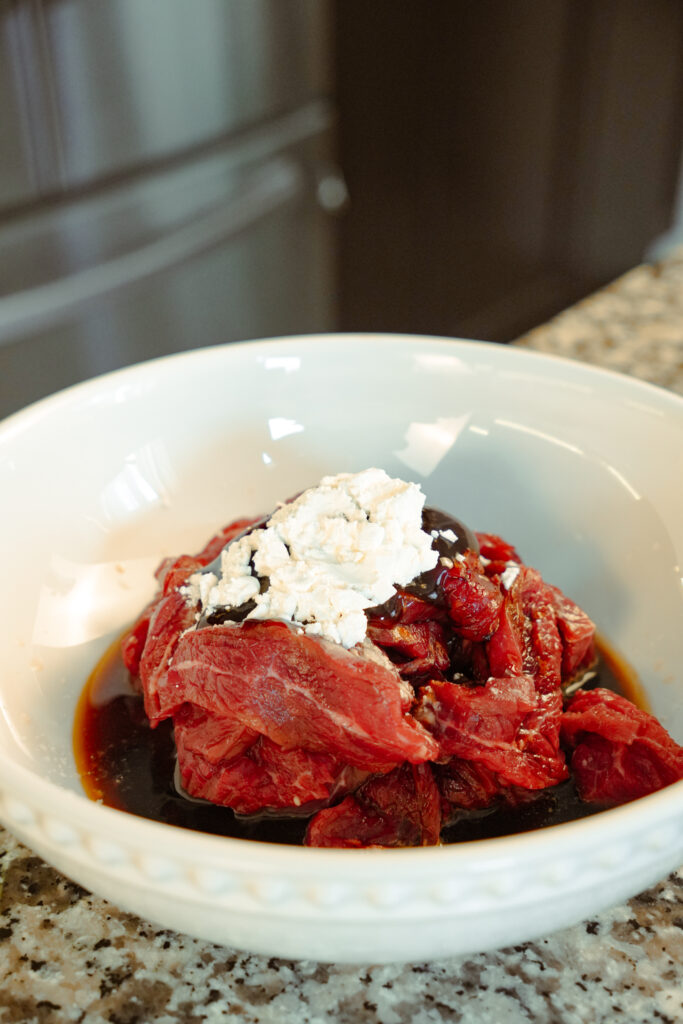
Slice the beef against the grain into thin, bite-sized pieces (about 1/4 inch thick). In a bowl, mix in the baking soda if using and let sit for 15 minutes. Rinse, pat dry, and then add soy sauce, dark soy sauce, oyster sauce, cornstarch, and water. Mix very well until the beef absorbs all the liquid. Add oil at the end to seal in the moisture. Let the beef marinate in the fridge for at least 15–20 minutes.
2. Prep the Egg
Crack the eggs into a bowl. Add the cornstarch slurry and salt, then beat thoroughly until you see small bubbles and the egg is evenly mixed. This step is key to getting that fluffy texture that absorbs the sauce later.
3. Cook the Egg
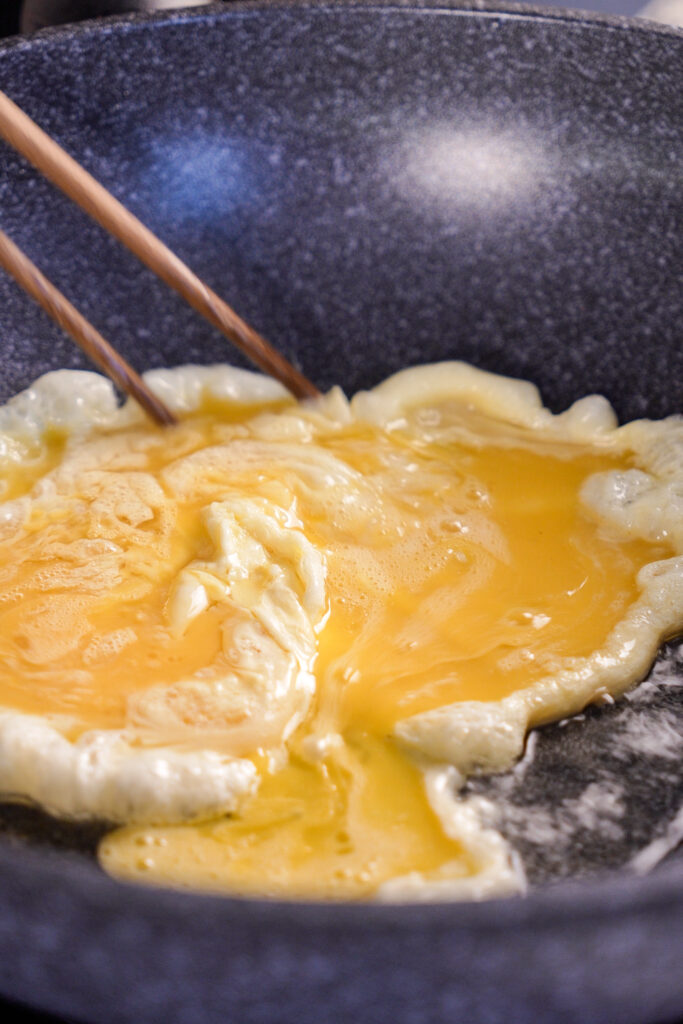
Heat about 2 tablespoons of oil in a nonstick pan over medium heat. Once the oil reaches around 220°F, pour in the egg. It should gently bubble without setting too quickly. Stir softly until just set. Avoid overcooking—runny eggs will make the sauce cloudy later. Remove and set aside.

4. Sear the Beef
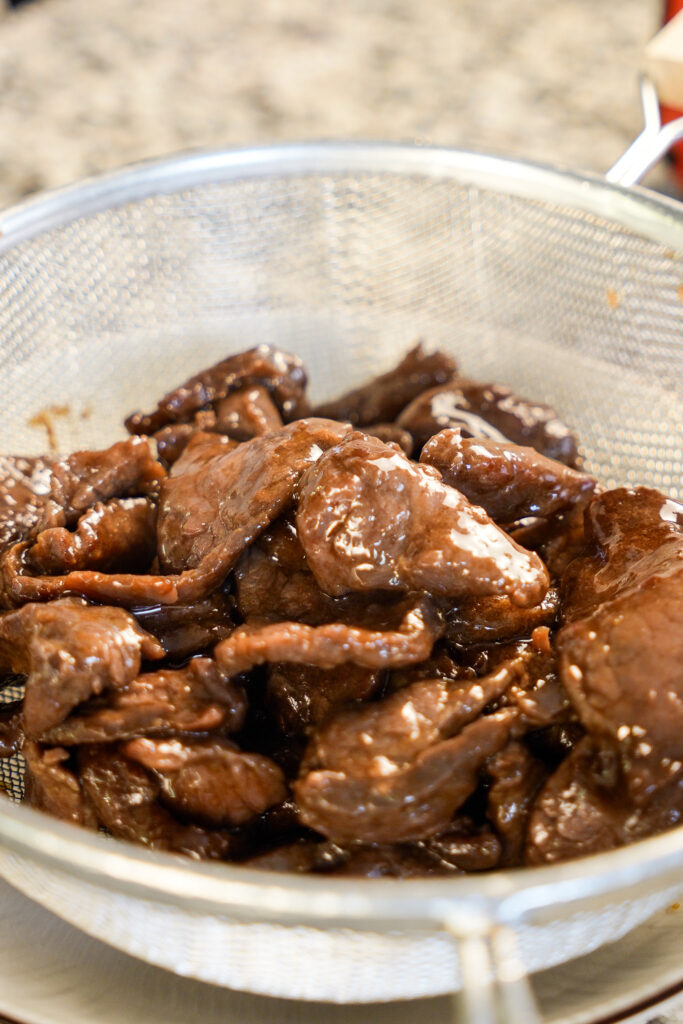
Wipe the pan clean. Add a generous amount of oil and sear the beef over medium-high heat, about 1 minute per side, just until the slices change color. Do not overcook. Remove and drain any excess oil.
5. Make the Tomato Sauce
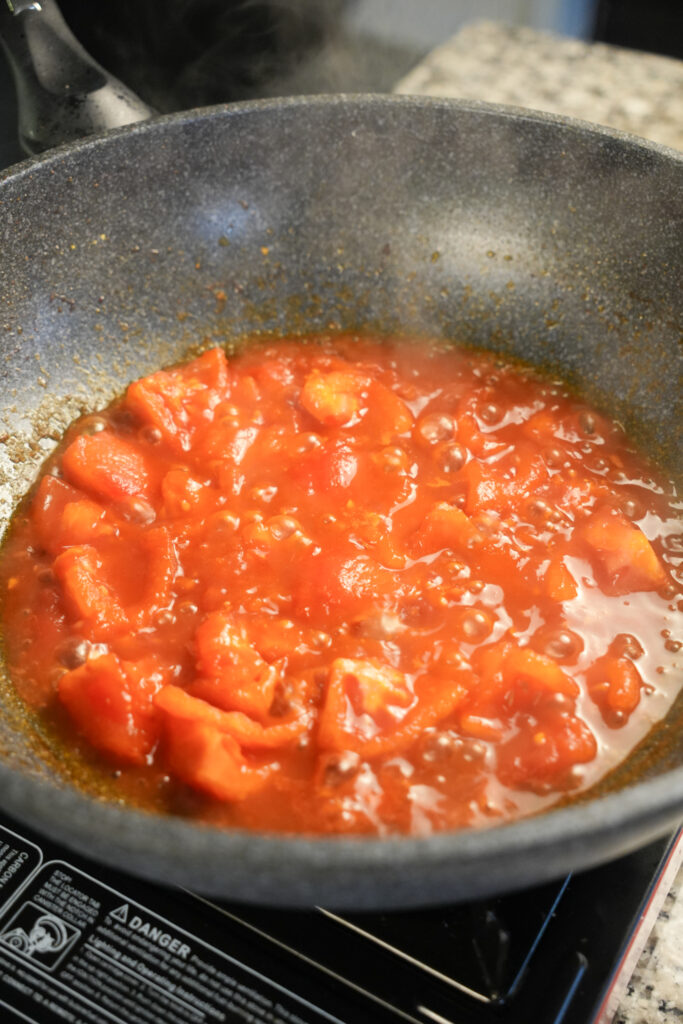
Using the remaining oil in the pan (add more if needed), sauté the chopped tomatoes. Add ketchup, soy sauce, salt, and water. Let everything simmer until the tomatoes soften and start to break down.
6. Combine Everything
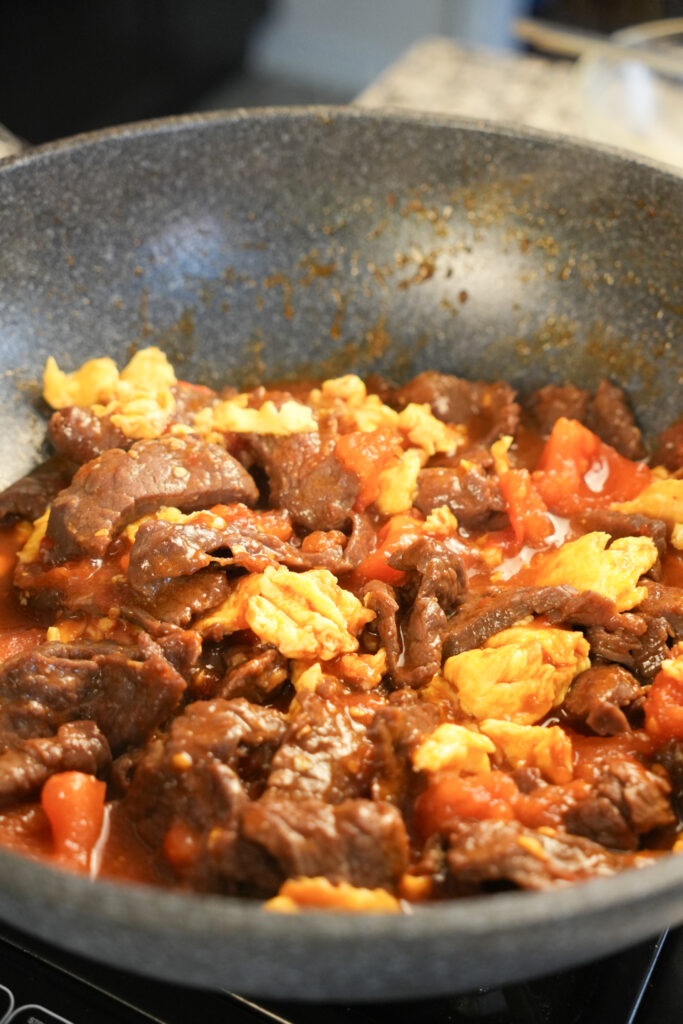
Add the cooked egg and beef back into the pan. Stir quickly to combine and coat everything evenly in the sauce. Once everything is heated through, turn off the heat.
Looking for more authentic recipes? Be sure to follow me on Pinterest, Instagram, Tiktok and Youtube!

Tomato Egg Stir-Fry with Beef (番茄牛肉炒蛋)
Equipment
- Wok or pan
Ingredients
For the Egg
- 3 large eggs
- 1 tsp cornstarch + 1 tbsp water cornstarch slurry
- 1/4 tsp salt
Beef Marinade
- 350 g thinly sliced beef flank, sirloin, or hotpot beef
- 1/2 tsp baking soda optional, skip for hotpot-style beef
- 1 tbsp soy sauce
- 1 tsp dark soy sauce
- 2 tsp oyster sauce
- 2 tbsp water
- 1 tsp cornstarch
- 1 tbsp neutral oil or sesame oil add at the end of marinating
For the Tomato Sauce
- Neutral oil for cooking
- 2 medium ripe tomatoes peeled and chopped
- 1 tbsp ketchup
- 1 tbsp soy sauce
- 1/4 tsp salt adjust to taste
- 3/4 cup water
Instructions
- Marinate the Beef: Slice the beef against the grain into thin, bite-sized pieces (about 1/4 inch thick). In a bowl, mix in the baking soda if using and let sit for 15 minutes. Rinse, pat dry, and then add soy sauce, dark soy sauce, oyster sauce, cornstarch, and water. Mix very well until the beef absorbs all the liquid. Add oil at the end to seal in the moisture. Let the beef marinate in the fridge for at least 15–20 minutes.
- Prep the Egg: Crack the eggs into a bowl. Add the cornstarch slurry and salt, then beat thoroughly until you see small bubbles and the egg is evenly mixed. This step is key to getting that fluffy texture that absorbs the sauce later.
- Cook the Egg: Heat about 2 tablespoons of oil in a nonstick pan over medium heat. Once the oil reaches around 220°F, pour in the egg. It should gently bubble without setting too quickly. Stir softly until just set. Avoid overcooking—runny eggs will make the sauce cloudy later. Remove and set aside.
- Sear the Beef: Wipe the pan clean. Add a generous amount of oil and sear the beef over medium-high heat, about 1 minute per side, just until the slices change color. Do not overcook. Remove and drain any excess oil.
- Make the Tomato Sauce: Using the remaining oil in the pan (add more if needed), sauté the chopped tomatoes. Add ketchup, soy sauce, salt, and water. Let everything simmer until the tomatoes soften and start to break down.
- Combine Everything: Add the cooked egg and beef back into the pan. Stir quickly to combine and coat everything evenly in the sauce. Once everything is heated through, turn off the heat.