
The Perfect All Purpose Chili Oil: The Ultimate Guide and Recipe
Chili oil should do more than make food spicy. A good chili oil adds fragrance, colour, texture, and layers of flavour to everything it touches.
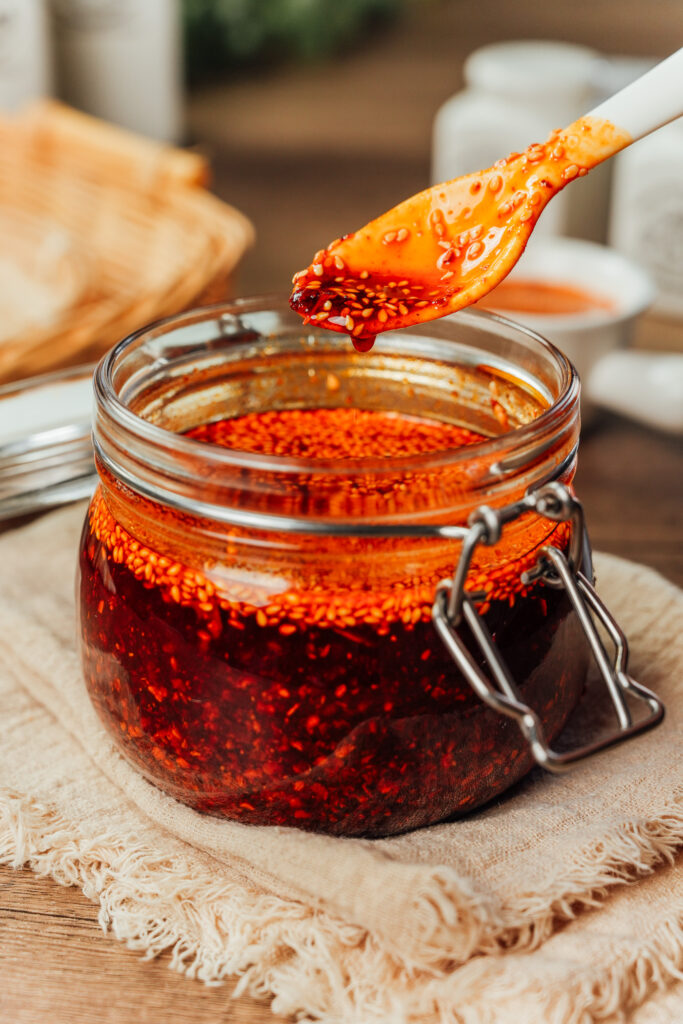
After trying different methods and recipes, this is the version I keep coming back to. The oil is slowly infused with onion, garlic, ginger, green onion, and whole spices, then poured over the chili mixture in three stages. This helps bring out different qualities from the chilies without burning them.
Compared with leaving raw ginger, garlic, or green onions in the finished chili oil, this method infuses their flavour into the oil and then removes the solids. This reduces the amount of moisture in the finished oil and helps it keep longer when properly refrigerated.
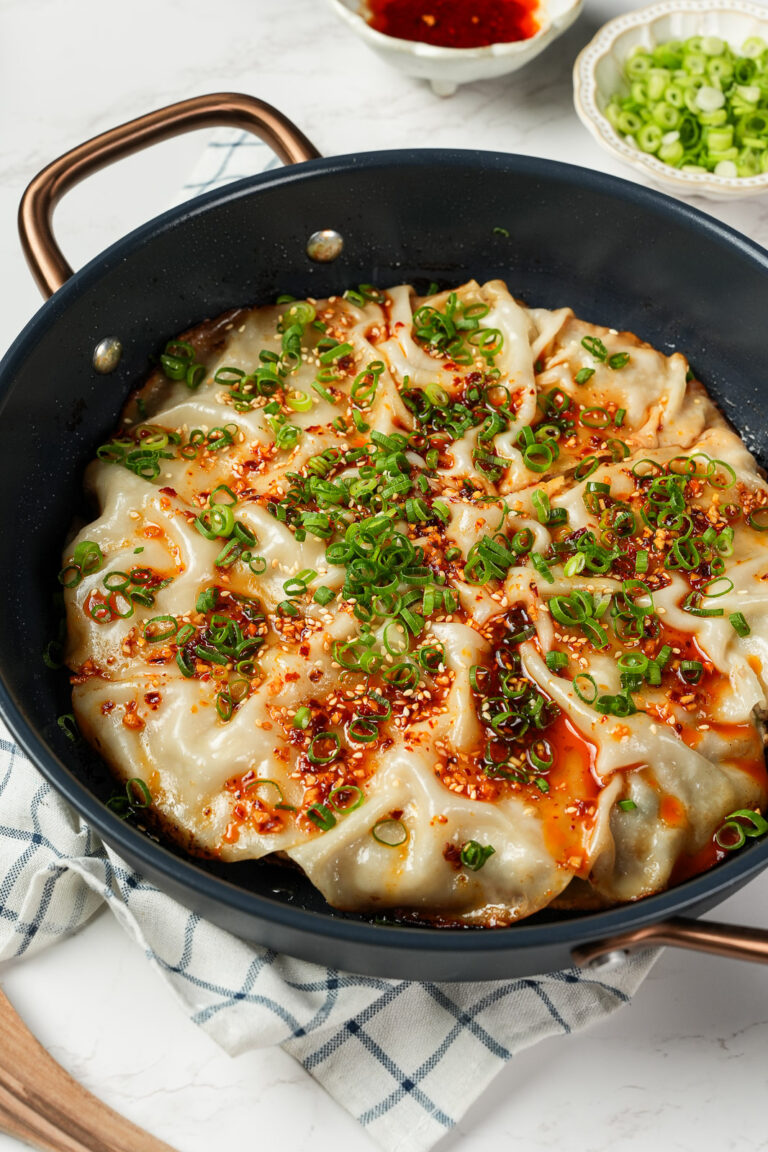
Spoon it over noodles, dumplings, eggs, rice, vegetables, or almost anything that could use a little extra flavour.
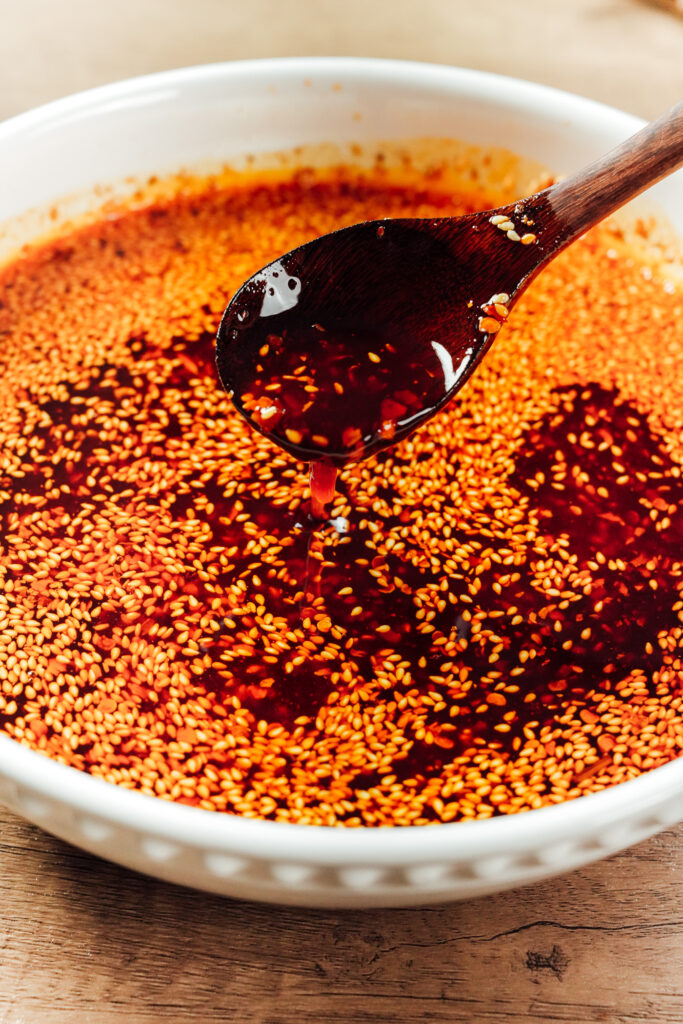
What Makes a Good Chili Oil?
The best chili oil balances four things:
- Heat from the chili
- Aroma from the chilies and infused oil
- Colour from the red chili pigments
- Texture from flakes, powder and sesame seeds
Chinese Chili Oil Recipe
What Kind of Chili Should You Use?
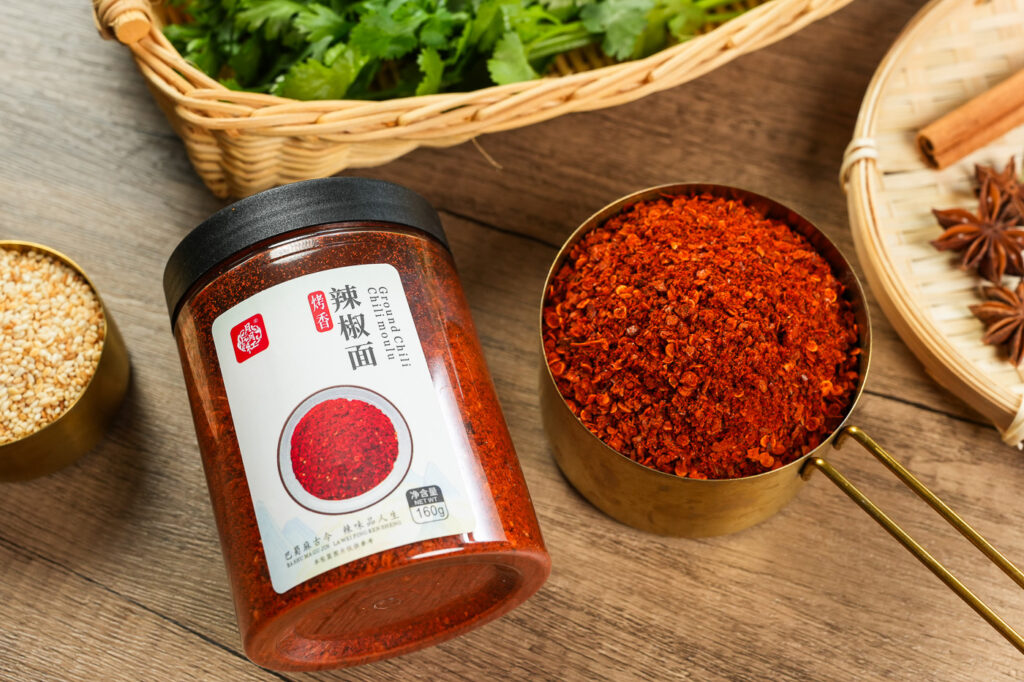
Sichuan Chili Flakes
I use Sichuan chili flakes because they are usually aromatic, brightly coloured, and full of lightly roasted, nutty flavour.
However, I recommend tasting your chili flakes before making the recipe. Products labelled “Sichuan chili flakes” may contain different chili varieties and can range from mild to very spicy. Some blends also contain a combination of coarse flakes and fine chili powder which is perfect for making chili oil.
Chili Flakes vs. Chili Powder
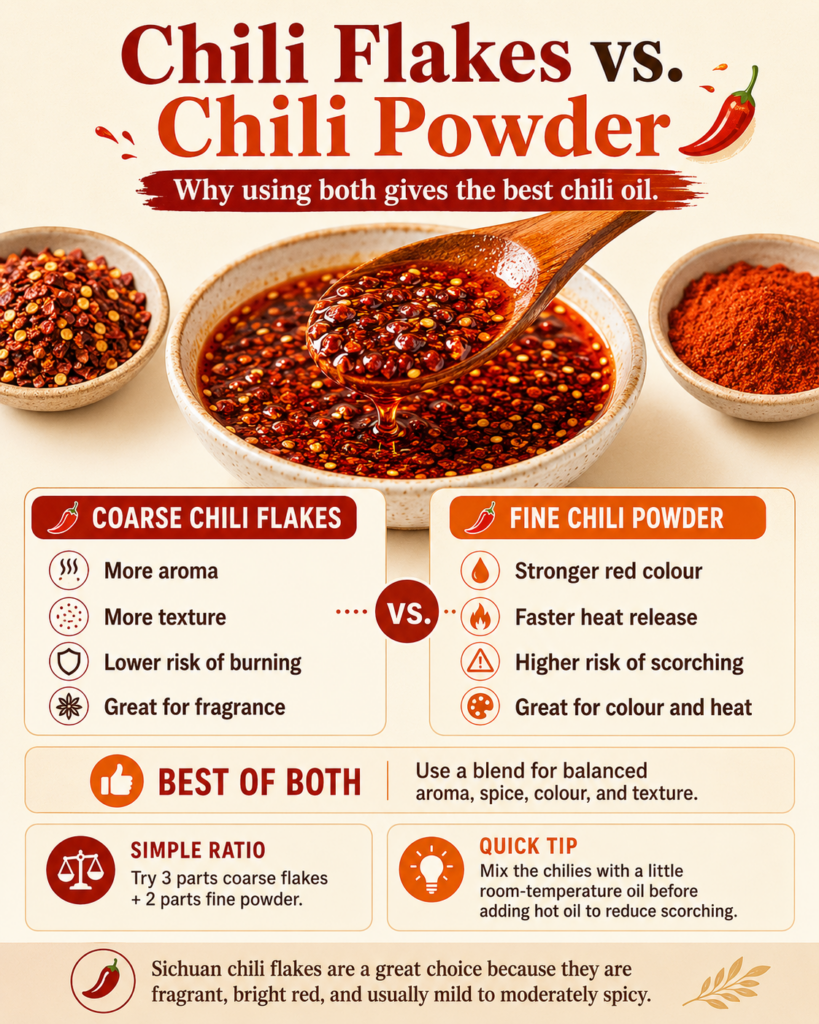
Chili flakes and chili powder behave differently when hot oil is poured over them. I recommend using a combination of both. The flakes add fragrance and texture, while the powder gives the oil a deeper red colour and more evenly distributed heat.
Instructions
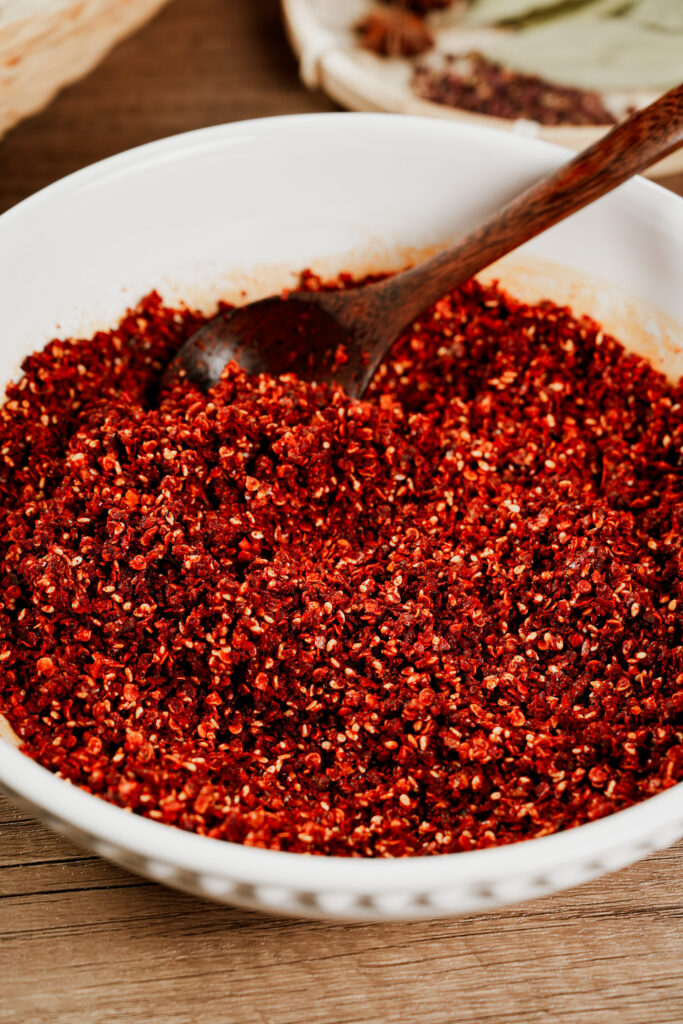
Place the Sichuan chili flakes, chili powder, toasted sesame seeds, salt, sugar and MSG (if using) in a large heatproof bowl. Add the vinegar and 3 tablespoons of canola oil. Mix until the chilies are evenly moistened.
Note: Why Add Vinegar and Cold Oil?
The vinegar helps brighten the colour and adds subtle acidity. The room-temperature oil lightly moistens the chili mixture, helping protect the finer chili powder from scorching when the hot oil is added.
The mixture should look damp and evenly coated, not wet or soupy
Add canola oil to a medium pot. Add the onion, garlic, ginger, and green onions.
Cook over medium-low heat for approximately 15 minutes, stirring occasionally, until the edges of the aromatics begin to look dry and lightly golden. The aromatics should cook gently. If they begin browning too quickly, reduce the heat.
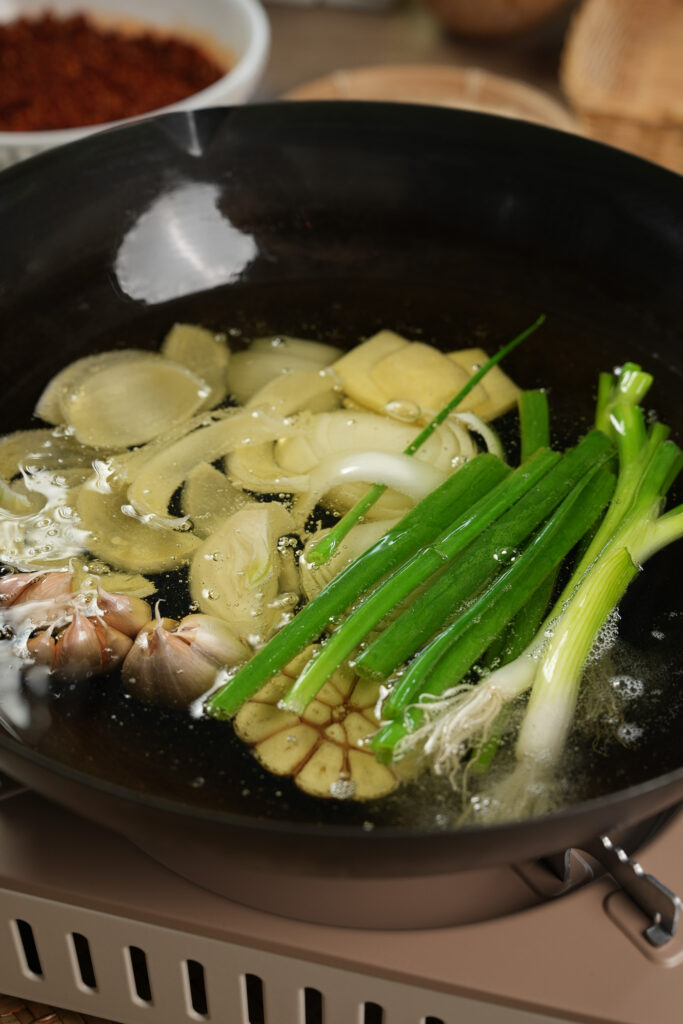
When the aromatics are lightly golden, add the star anise, bay leaves, cinnamon stick, and Sichuan peppercorns. Continue cooking for approximately 5 minutes.
Add the cilantro last. Continue cooking over low heat until the aromatics are golden, dry-looking, and fragrant. DO NOT allow them to become too dark or burnt, as this can make the oil taste bitter.
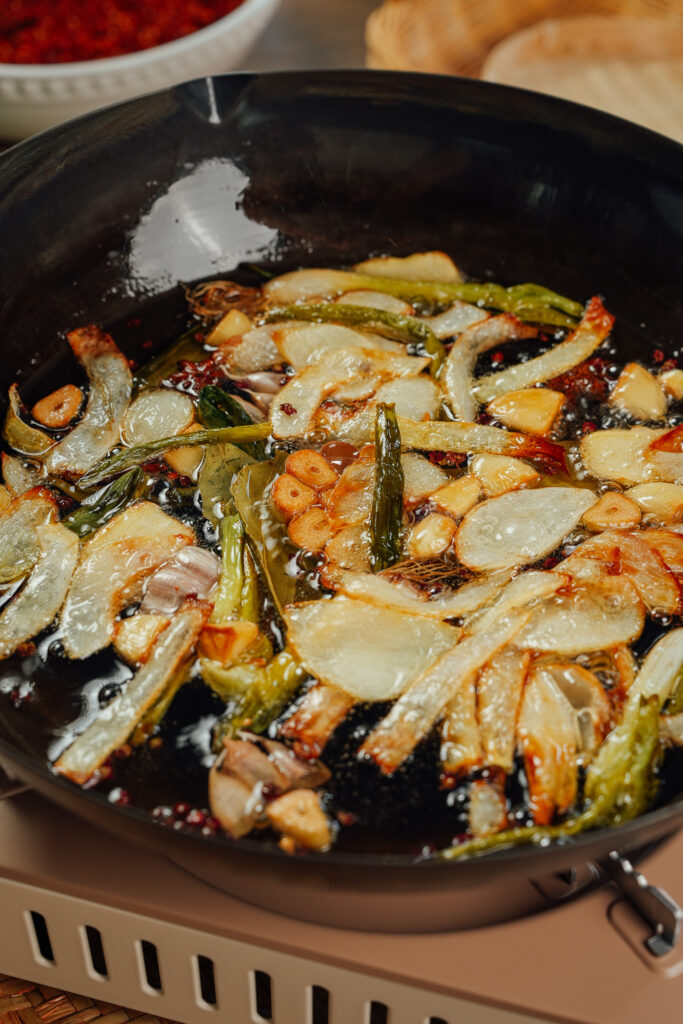
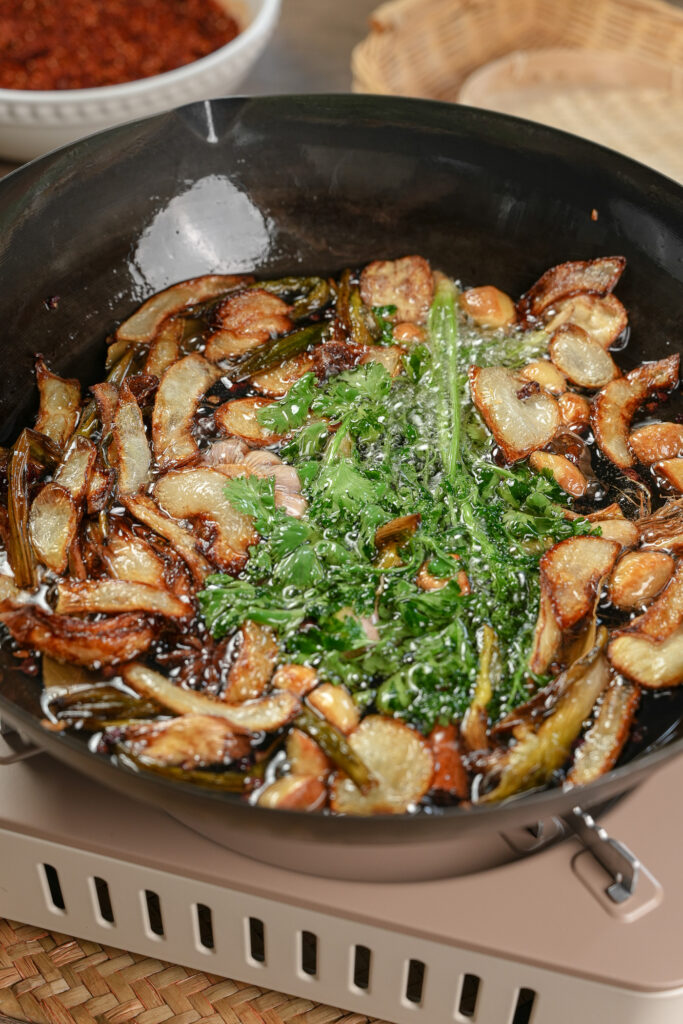
Carefully strain out all the aromatics and whole spices. Return the strained oil to the pot and heat it to approximately 200°C/395°F, then turn off the heat.
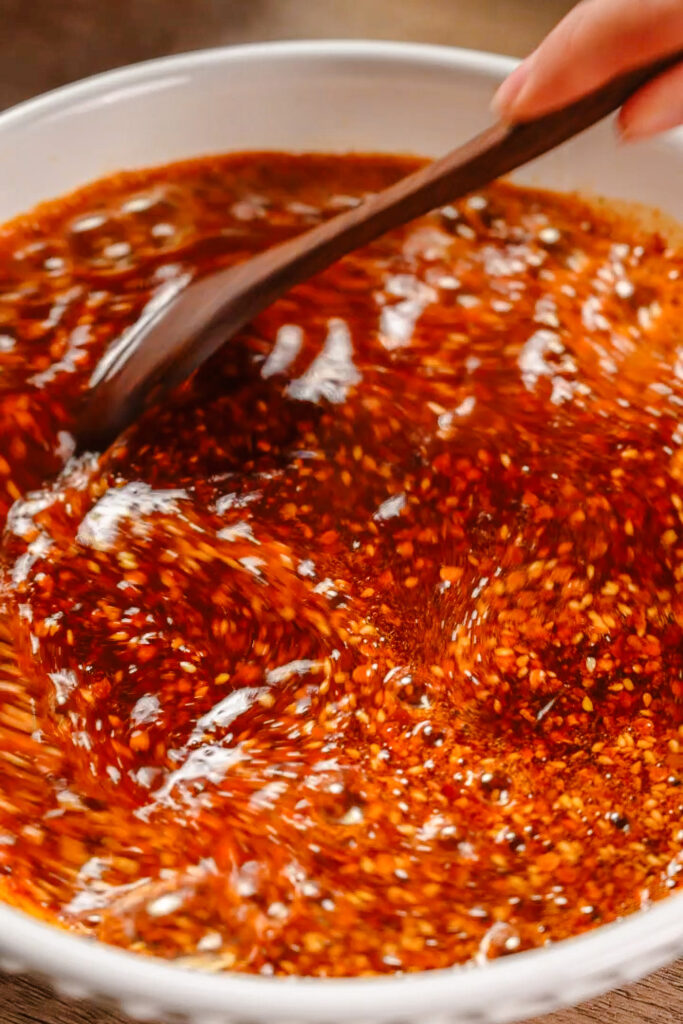
Carefully pour approximately one-third of the hot oil over the chili mixture. It should bubble immediately.
Stir thoroughly, then pour in the second third. Stir again before adding the remaining oil. Continue stirring until everything is evenly combined.
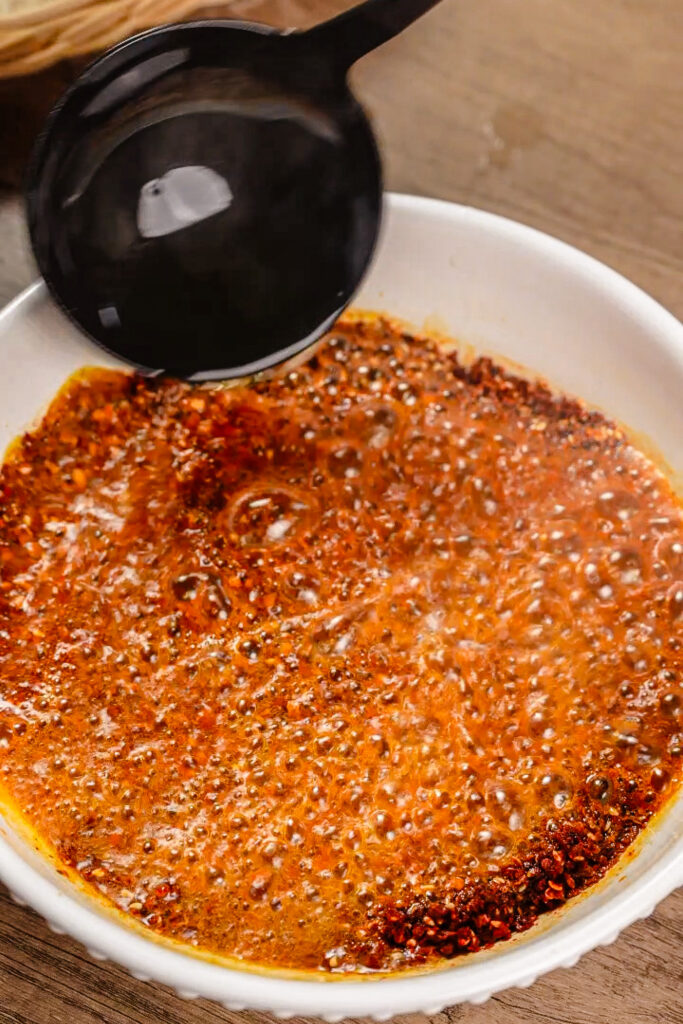
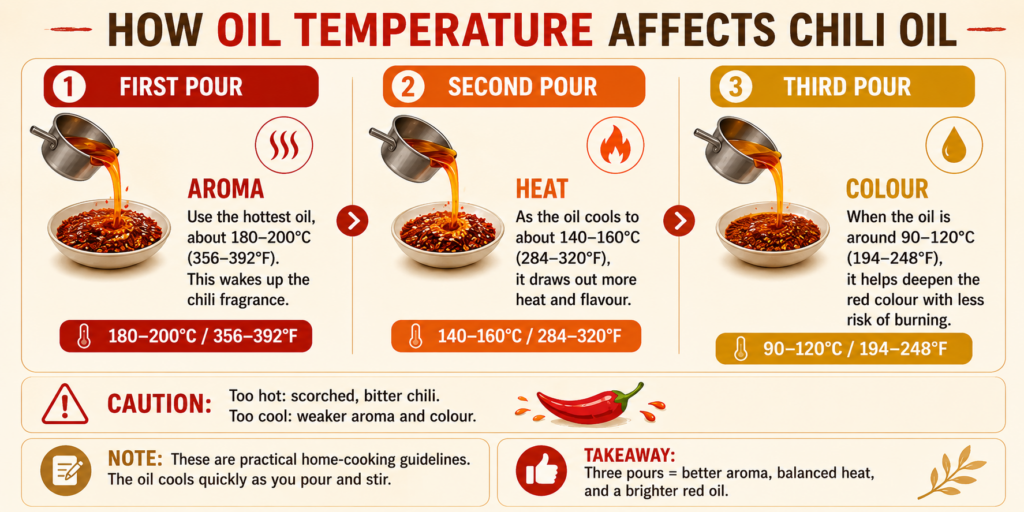
Why Pour the Oil in Three Stages?
Oil temperature affects the aroma, heat, and colour of the finished chili oil. Pouring the oil in three stages allows the temperature to gradually decrease.
Let the chili oil cool completely before transferring it to clean, airtight jars.
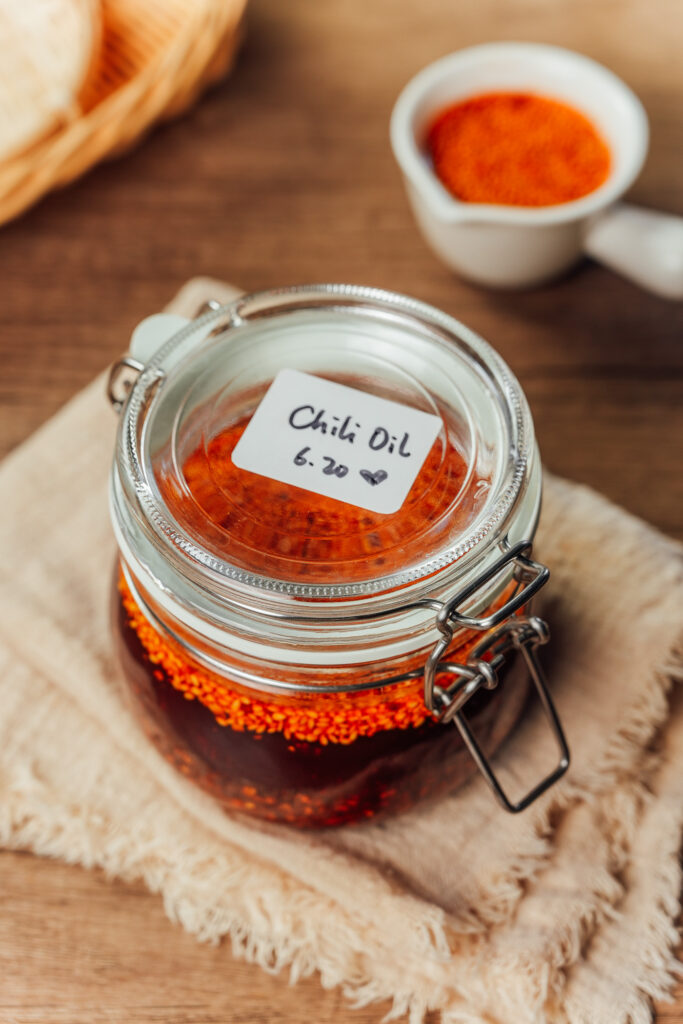
Keep it refrigerated and always use a clean, dry spoon. For the best flavour and quality, enjoy it within about one month. The aroma and freshness will gradually fade over time.
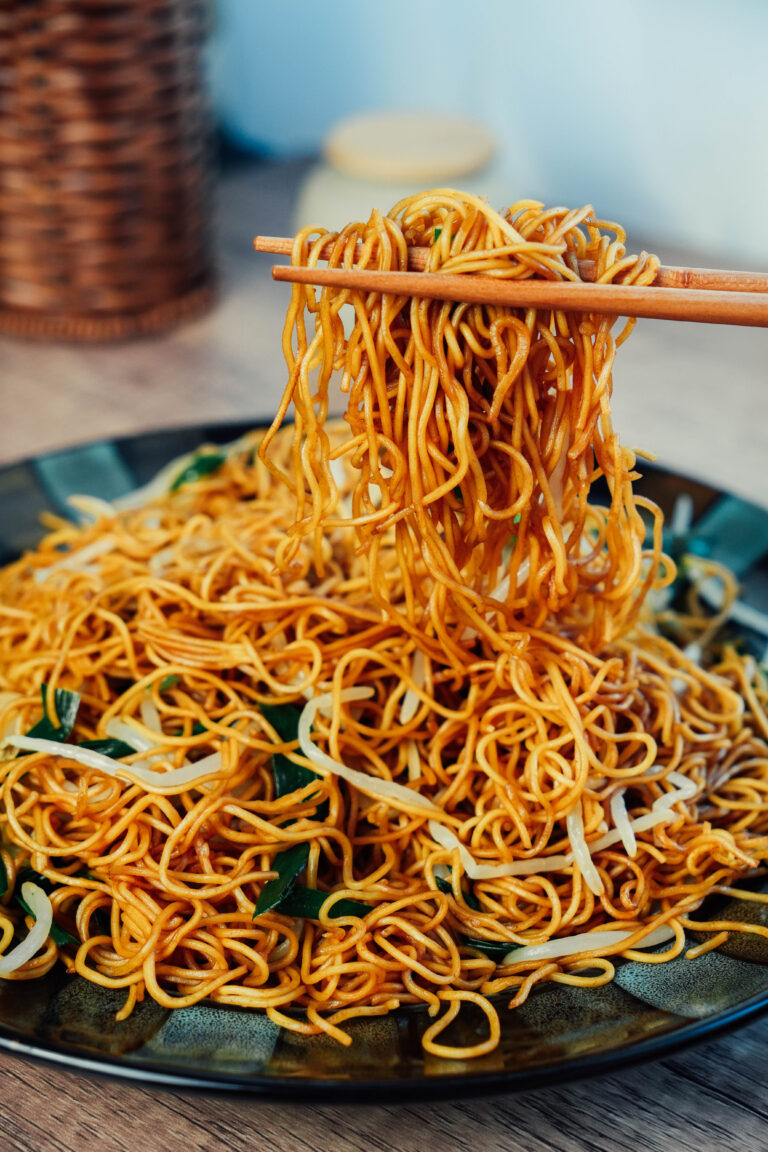
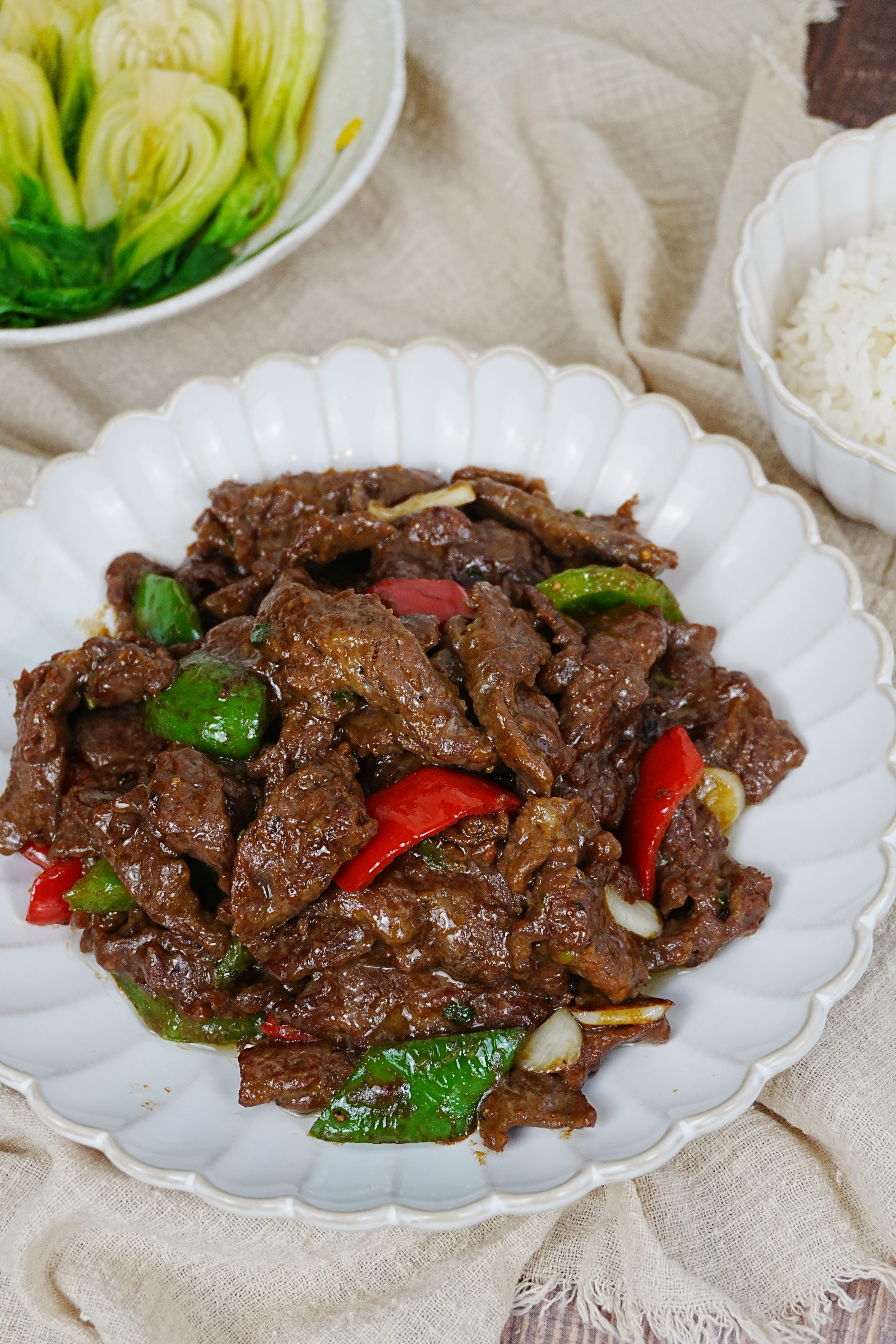
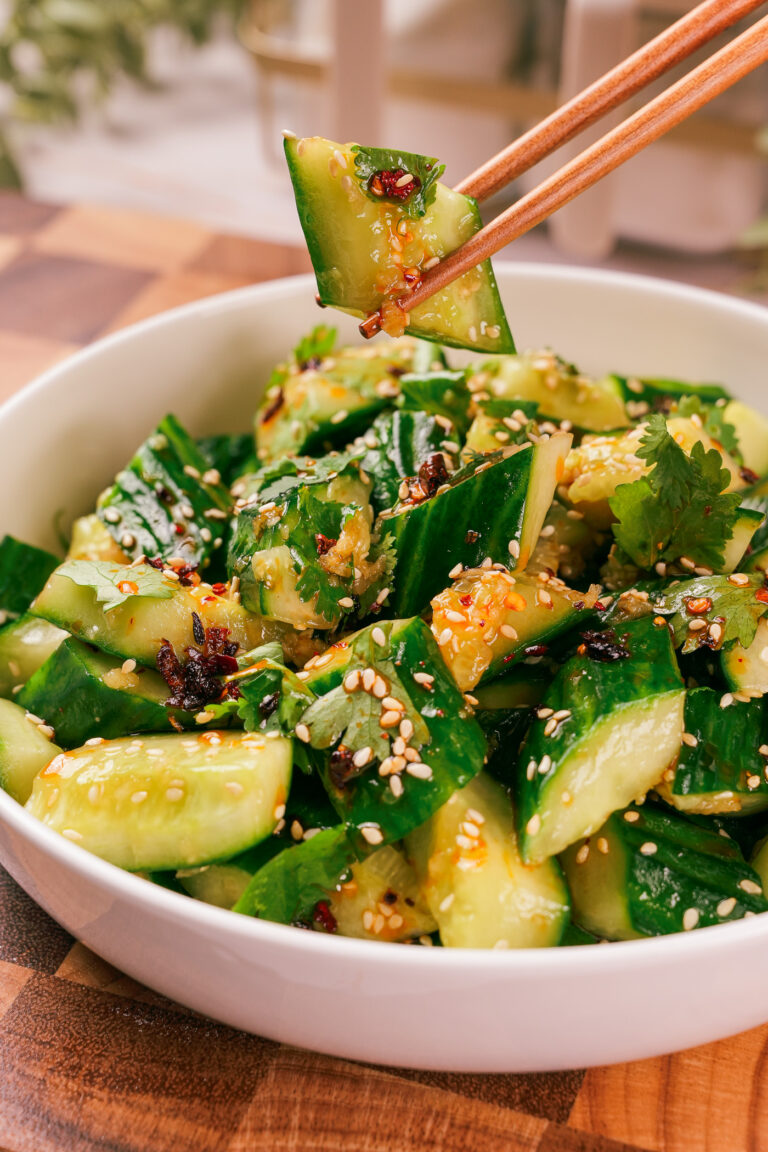
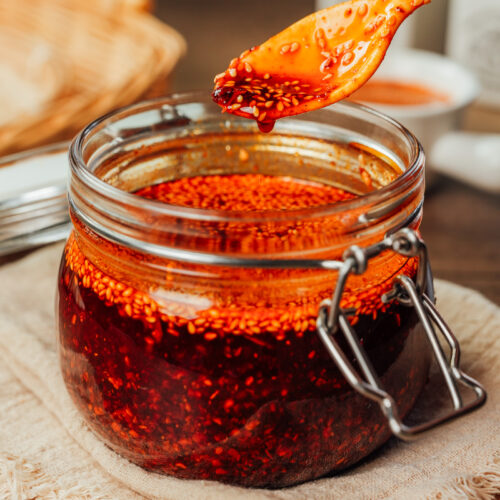
This chili oil can elevate almost any dish. I especially love adding it to noodles (i.e. Chinese Braised Beef Noodle Soup, Pad See Ew), dumplings, wontons, egg fried rice, and cold dishes (i.e. cucumber salad).
Chinese Chili Oil
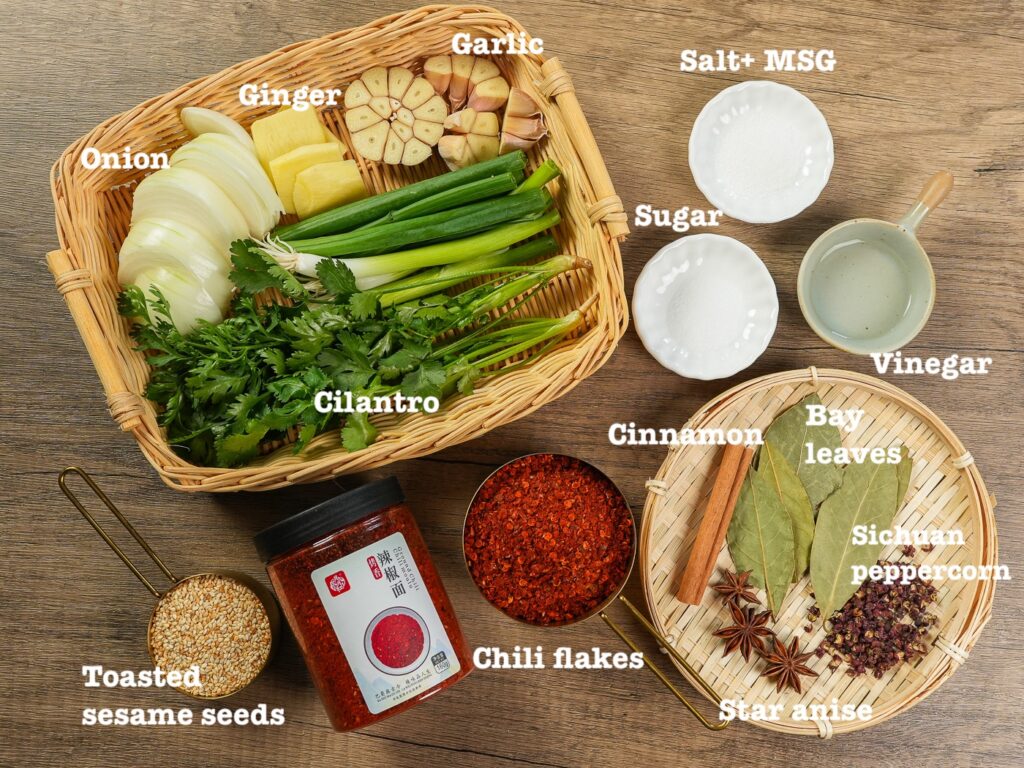
Ingredients
Chili Mixture
- 1⅓ cup Sichuan chili flakes Or use a combination of chili flakes and chili powder, with a 2:1 ratio of flakes to powder
- ¼ cup toasted sesame seeds
- ½ tsp salt
- 1 tsp sugar
- ½ tbsp clear vinegar
- ½ tsp MSG optional
- 3 tablespoons canola oil
Infused Oil
- 2-2.5 cups canola oil or another neutral cooking oil
- ½ onion roughly chopped
- 1 whole garlic bulb halved crosswise
- 1½ tbsp sliced ginger
- 3 green onions cut into large pieces
- 2–3 star anise
- 5 bay leaves
- 1 cinnamon stick
- ½ tablespoon Sichuan peppercorns
- 1 small bunch cilantro
Instructions
- Place the Sichuan chili flakes, chili powder, toasted sesame seeds, salt, sugar and MSG (if using) in a large heatproof bowl. Add the vinegar and 3 tbsp of canola oil. Mix until the chilies are evenly moistened.
- Add canola oil to a medium pot. Add the onion, garlic, ginger, and green onions.
- Cook over medium-low heat for approximately 15 minutes, stirring occasionally, until the edges of the aromatics begin to look dry and lightly golden. The aromatics should cook gently. If they begin browning too quickly, reduce the heat.
- When the aromatics are lightly golden, add the star anise, bay leaves, cinnamon stick, and Sichuan peppercorns. Continue cooking for approximately 5 minutes.
- Add the cilantro last. Continue cooking over low heat until the aromatics are golden, dry-looking, and fragrant. DO NOT allow them to become too dark or burnt, as this can make the oil taste bitter.
- Carefully strain out all the aromatics and whole spices. Return the strained oil to the pot and heat it to approximately 200°C/395°F, then turn off the heat.
- Carefully pour approximately one-third of the hot oil over the chili mixture. It should bubble immediately.
- Stir thoroughly, then pour in the second third. Stir again before adding the remaining oil. Continue stirring until everything is evenly combined.
- Let the chili oil cool completely before transferring it to clean, airtight jars.
- Keep it refrigerated and always use a clean, dry spoon. For the best flavour and quality, enjoy it within about one month. The aroma and freshness will gradually fade over time.